ESPN Plus Blackout Rules: Why a Game Is Blocked
ESPN plus blackout is the phrase that appears whenever a subscriber pays for a match and then cannot watch it, and the explanation is almost always a boundary drawn by league rule rather than a fault on the platform. The service carries a package of out-of-market and exclusive fixtures, and the local market is deliberately carved out of that package.
The mechanism is not a technical failure and it is not random. It follows a map built from postcodes, broadcast territories and the contracts that a league signs with regional networks, and once a viewer understands that map the experience stops feeling arbitrary.
Espn plus blackout: how the local market is defined
A blackout exists because a club sells its local television rights to a regional network, and a national streaming package is not allowed to undercut that sale inside the same territory. The territory is drawn by postcode, not by distance, which is why a match can be unavailable in one zip code and available in the next town.
The result is a patchwork. A viewer in a market with a strong regional network loses more matches from the streaming package than a viewer in a market without one, and the difference can be dozens of fixtures across a season.
Espn plus blackout restrictions and the sports they touch
Football is affected less than the American leagues, because the European competitions are sold nationally rather than regionally. Where a blackout does bite is in the domestic leagues and in the sports that run on regional networks for most of the season.
Hockey, basketball and baseball generate the largest share of blackout complaints, and the pattern carries across to any football competition where a local broadcaster holds the territorial rights. For a viewer who follows one club, this is worth checking before subscribing rather than after.

Home territory, billing country and the verification request
A home territory is the area a club and its regional network claim for broadcast purposes. It is defined by postcode rather than by distance, so a subscriber twenty kilometres from a stadium can be inside a territory while a viewer a hundred kilometres away is outside it.
The account is what the platform reads when a stream is authorised, not the device. A subscription billed in one country and used from another produces a verification request rather than a working stream, and repeated attempts to work around that are the pattern that leads to suspension.
The practical preparation is short. Look up the postcode against the provider's own blackout tool, note which network holds the territory, and decide before the season whether that network is worth the cost of a bundle that carries it.
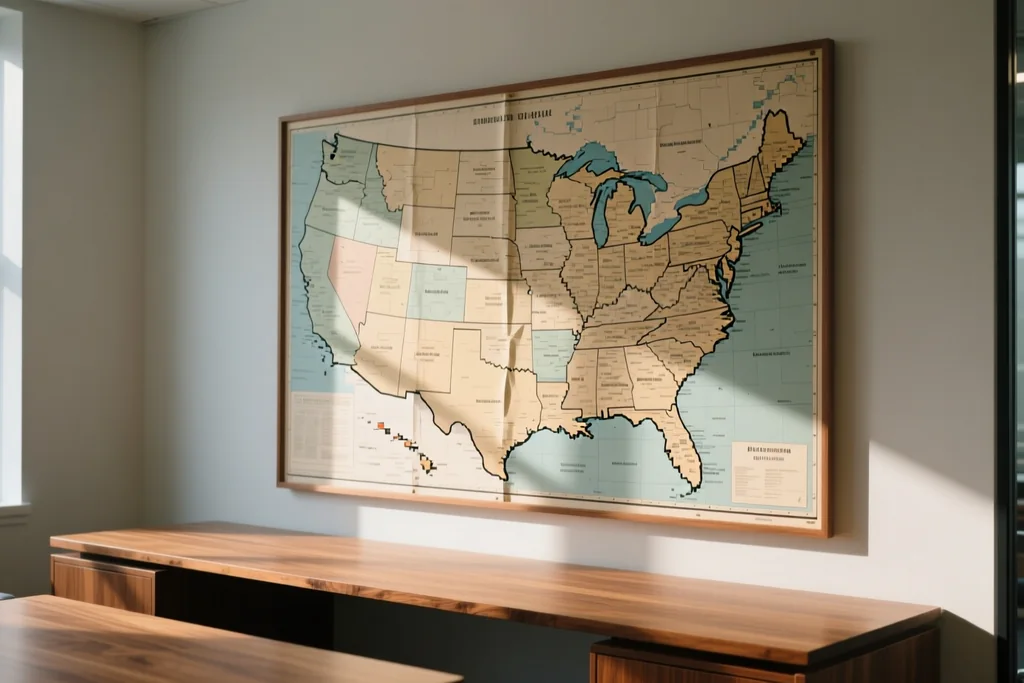
Reading a blackout map before the season starts
| Cause | What it means | Legal alternative |
|---|---|---|
| Local market exclusion | A regional network holds the territory | Subscribe to that network through a bundle |
| National broadcast exclusivity | A network has exclusive live rights | Watch the network, or use an antenna |
| Competition not in the package | The rights sit elsewhere | A different subscription entirely |
| Temporary rights window | Blackout lifts after a set period | Wait for the replay inside the same app |
| Account territory mismatch | Verification prompt, not a blackout | Sign in from the billing country |
What a subscriber can legally do about it
Two routes work. The first is the regional network that holds the territory, usually reachable through a live-TV bundle rather than a direct subscription. The second is a broadcast affiliate for the matches that a national network has picked up, which is the cheapest legal option in the market and covers a surprising number of fixtures.
- Check your postcode against the provider's own blackout lookup before paying.
- Identify which regional network holds your club's territory and whether a bundle carries it.
- Use an antenna for the matches shown on a local broadcast affiliate.
- Watch the replay window inside the same app when a blackout lifts.
- Ignore the workaround videos: they breach terms of service and put the account at risk.
Why the workaround advice is worse than it sounds
The common suggestion is to point a connection at a different region, and it rarely works for the reason people expect. A blackout is applied to the account and its billing territory, so a changed address produces a verification prompt rather than a working stream, and repeated attempts are the pattern that gets accounts suspended.
There is also a cost that is easy to miss. A subscription cancelled after a terms of service breach usually takes the payment history with it, so the viewer loses a season of access to gain one match.
Planning a season around the map
Once the territory is known, the plan writes itself. A supporter in a market with a regional network needs that network plus a broadcast route; a supporter of a club whose rights sit entirely inside the streaming package needs only the subscription. The league-by-league blackout comparison sets out where the rules differ, the VPN question covers what a changed address can and cannot do, and the Spanish league route is an example of a competition with no regional carve-out at all.