
Streaming TV Buffering Fix: Step-by-Step
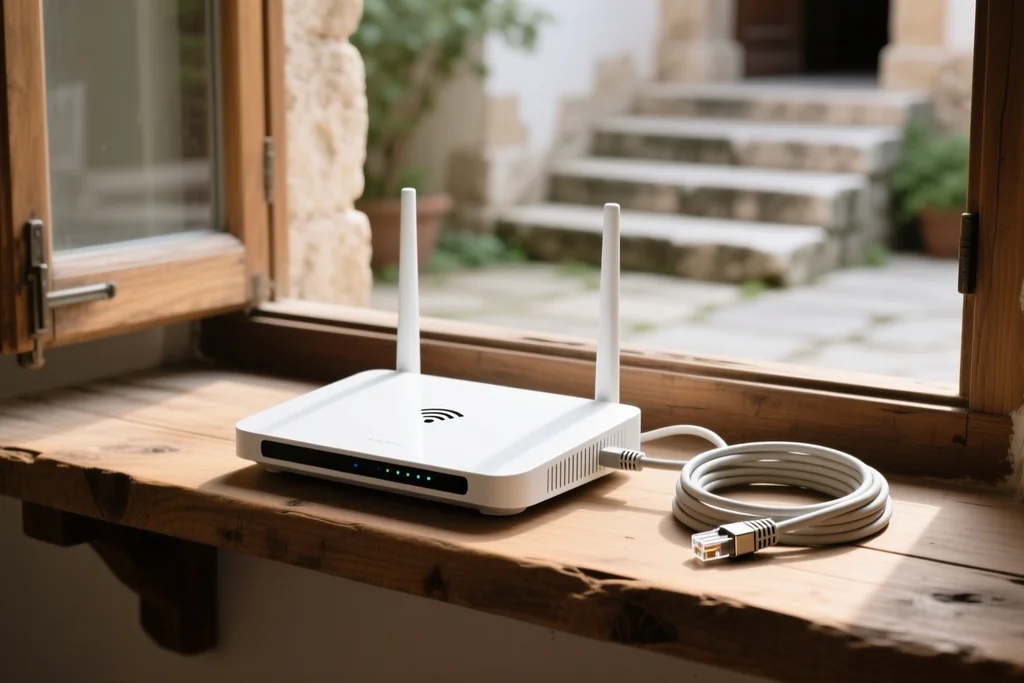
A streaming tv buffering fix almost always starts in the wrong place, because the symptom points at the app while the cause sits somewhere in the chain behind it. The picture stutters at kick-off because that is the moment when every household in the neighbourhood starts pulling the same stream, and the weakest link in your own setup gives way first.
Working through the chain in order takes twenty minutes and resolves most cases without contacting the provider.
Streaming tv buffering fix: work the chain in order
Start with the measurement rather than the theory. Run a speed test on the device that buffers, not on a laptop in another room, and do it while a stream is playing. A connection that reports several hundred megabits per second when idle can deliver a fraction of that on a congested wireless band at eight in the evening.
If the number holds up while streaming and the picture still stutters, the problem is upstream of the router or inside the device, and the next steps change accordingly.
What causes buffering streaming: the four real sources
Nearly every case belongs to one of four groups: insufficient sustained throughput, wireless interference, an overloaded device, or congestion on the provider's side at peak demand. The first three are within reach of the viewer, and the fourth is not.
Peak demand deserves a mention because it is so often misdiagnosed. A provider serving a large live audience at the same minute will occasionally run short on capacity in a specific region, and the resulting stutter affects every subscriber in that area regardless of their home setup.
Ethernet, wireless channels and the firewall question
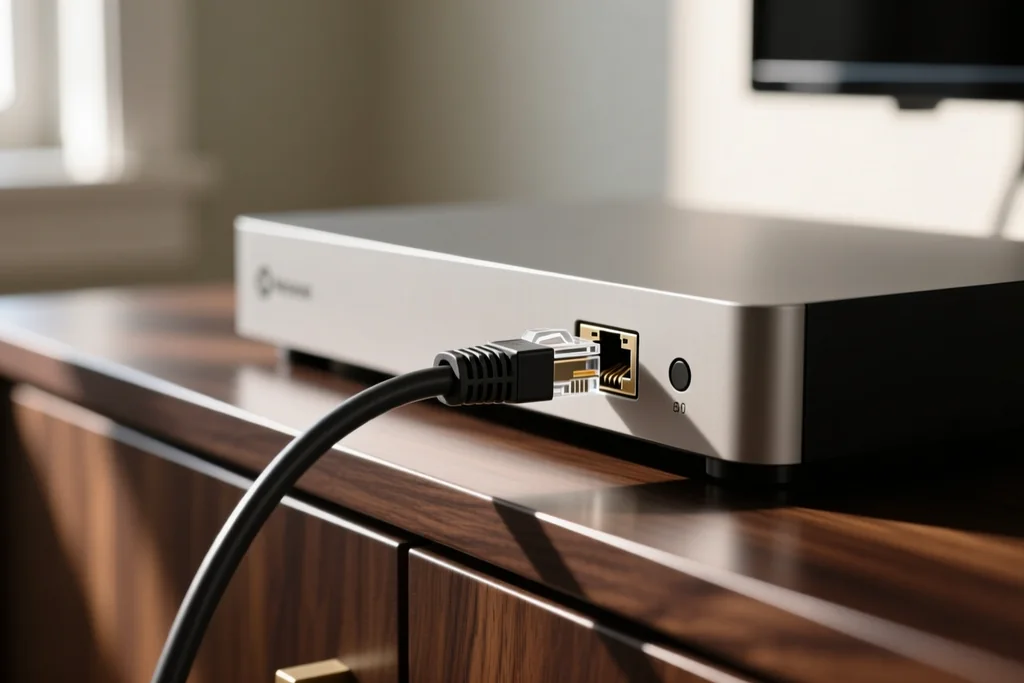
An ethernet cable between the router and the main streaming device removes interference, distance and band congestion in one move, and it costs less than a month of most subscriptions. It is the single change that most often ends a season of stuttering pictures.
Where a cable is impossible, look at the wireless channel rather than the signal bars. A crowded channel in a block of flats produces drops that a signal indicator never shows, and switching to a less used channel in the router settings is a two-minute fix.
A firewall on a managed network is the case worth knowing about. Corporate and campus networks sometimes block the ports a streaming app needs, which produces a stream that loads and then fails rather than a stream that never starts.
Bandwidth numbers that actually matter
| Quality | Sustained need | Comfortable headroom |
|---|---|---|
| Standard definition | 3 Mbps | 6 Mbps |
| High definition | 5 to 8 Mbps | 15 Mbps |
| 4K with HDR | 15 to 25 Mbps | 40 Mbps |
| Two simultaneous streams | Double the above | Plus a margin for overhead |
| Household with gaming and calls | Add 10 Mbps per active device | Measure during the match, not before |
Router placement and the wireless band
Wireless is a shared medium and distance is the enemy. A router behind a television, inside a cabinet or next to a microwave is working against itself, and a device two walls away on the older 2.4 gigahertz band will hold a fraction of the throughput available on the 5 gigahertz band.
- Lift the router off the floor and out of cabinets.
- Prefer the 5 gigahertz band for streaming devices, keeping 2.4 for distance.
- Change the wireless channel if the neighbourhood is crowded.
- Restart the router occasionally; long uptimes degrade some consumer models.
- Clear the app cache on the streaming device after a firmware update.
Wired where it counts
One cable from the router to the main streaming device removes wireless from the chain entirely and is the single most effective fix. It costs less than a month of most subscriptions, and it eliminates interference, distance and band congestion at once.
Where a cable is impossible, a mesh node beside the television is the next best option, provided it is connected to the main router by cable or a dedicated wireless backhaul rather than repeating a weak signal. After that, the honest question is whether the device itself is the limit, which is what the device comparison is for. The delay piece covers the separate problem of a stream that runs fine but late, and the 4K guide explains why a higher-resolution tier puts more strain on the same connection.
Working through buffering from the wall outwards
Start at the box and move outwards. A wired connection removes the most common cause outright, and where a cable is impractical, moving the router closer or changing the wireless channel often does the same job at no cost. Most matchday stutter is a local problem rather than a server one.
Bandwidth is the second test. A high bitrate stream needs several times the throughput of a standard one, and a household running a second stream, a game download and a cloud backup at once will starve the television. Measuring the speed at the device, not at the router, is the honest check.
The device is the third variable. Older hardware decodes newer codecs in software, which shows up as stutter that no amount of bandwidth fixes. A streaming stick that supports the current format resolves it for less than a month of subscription.
Only after those three does the provider matter. Peak demand around a major fixture slows the delivery network as well as the local connection, and a feed that is fine on a Tuesday can struggle on a Saturday afternoon. Re-testing at a quiet hour separates the two.